Arizona Property Title: 4 Common Co-Ownership Forms and Inheritance Differences
Understand four common Arizona co-ownership forms, survivorship and probate questions to discuss before signing title documents.
Buying a home in Arizona involves more than choosing a location and arranging financing. Another important question is: How will the property's title be held?
Some buyers purchase with a spouse, others invest with relatives or friends, and some want to leave the home to their children.
The ownership form can affect co-owners' rights, a future sale and the transfer of an owner's interest after death.
This guide introduces four common Arizona co-ownership forms and questions to consider before buying. These are not all possible ownership or estate-planning arrangements. Sole ownership, trusts and other options are outside this comparison.
1. What is title, and why does the ownership form matter?
In a U.S. real estate transaction, title refers to legal ownership of property, while a deed is a document commonly used to transfer an ownership interest.
The title documents may identify one or more owners and the legal form in which they hold the property.
With a single owner the situation is often more straightforward. Purchases by spouses, relatives or other co-owners raise additional questions:
- What interest does each person own?
- Can an individual sell or transfer their own interest?
- Who receives an owner's interest after that owner dies?
- Could probate proceedings be involved?
- Does the ownership form fit the family's future asset plans?
Arizona is a community property state. Under the general statutory rule, property acquired during marriage may be community property, while property owned before marriage or acquired by gift, devise or inheritance may have a different character. Section 25-211 also addresses property acquired after service of certain divorce-related petitions. The source of funds and the documents still need to be examined in each case.
A property being recorded in one spouse's name alone therefore does not establish that the other spouse has no rights.
2. Four common Arizona ownership forms
1. Community Property
Community property is a common ownership form under Arizona's marital property system.
In general, both spouses have interests in a home that legally constitutes community property.
Arizona law requires both spouses to join in specified transactions involving community real property, including acquisition, disposition and encumbrance. One spouse should not assume they can independently sell the entire community-owned home.
A particularly important distinction is: Community property alone does not automatically include a right of survivorship.
After a spouse dies, the transfer of that spouse's interest depends on valid wills, trusts, beneficiary arrangements and Arizona succession law.
Without a will, the result can also differ according to the family situation, including whether there are children from a previous relationship.
2. Joint Tenancy with Right of Survivorship
Joint tenancy with right of survivorship is commonly abbreviated JTWROS.
Its central feature is survivorship among the joint owners.
When one joint owner dies, an interest subject to an effective survivorship right generally passes to the surviving joint owner or owners under law, rather than being distributed directly under the deceased owner's will.
Eligible groups of two or more people can hold JTWROS; it is not limited to unmarried owners. Spouses, relatives and other co-owners may use this form.
Survivorship rights are not necessarily permanent. Arizona law permits termination through recorded documents when the applicable conditions are met.
Check the recorded documents to determine whether survivorship remains effective. Terminating a survivorship right and selling an entire property are different matters; the consent requirements for one cannot be assumed from the other.
3. Community Property with Right of Survivorship
Community property with right of survivorship is abbreviated CPWROS.
This form combines community-property ownership with survivorship rights.
It applies to spouses holding property together where valid title documents expressly establish the survivorship right.
If one spouse dies while the survivorship right remains effective, that property interest generally passes directly to the surviving spouse without ordinary probate solely to transfer that interest.
This does not eliminate subsequent paperwork. A death certificate, affidavits or updates to the property records may still be necessary.
Arizona law also provides a process for terminating CPWROS survivorship rights. It should not be understood as an arrangement that can never be changed.
4. Tenancy in Common
Tenancy in common, or TIC, is another common form of ownership by multiple people.
For example, two relatives or friends investing together may establish their respective ownership percentages.
TIC interests need not be equal and do not carry the automatic survivorship feature of JTWROS.
A co-owner can generally deal with the interest they are legally entitled to transfer, but owning a share does not authorize selling another person's interest.
After a co-owner dies, their share generally transfers under valid estate planning, a will or intestate succession rather than automatically passing to another co-owner.
For an investment with friends or relatives, consider a co-ownership agreement alongside the title documents. Address future sales, expense sharing and how an owner can exit the investment.
3. Comparing the four ownership forms
| Ownership form | Common eligible owners | Survivorship | Transfer and death-related considerations |
|---|---|---|---|
| Community Property | Spouses | Not automatic | Transactions disposing of community real property generally require both spouses; a deceased spouse's interest follows valid estate arrangements or succession law |
| Joint Tenancy with Right of Survivorship | Two or more people, including spouses | Yes | While survivorship is effective, the deceased owner's interest generally passes to the surviving co-owners; rights can be terminated according to law |
| Community Property with Right of Survivorship | Spouses | Yes | Retains community-property character; while survivorship is effective, the deceased spouse's interest generally passes to the surviving spouse |
| Tenancy in Common | Two or more people | No | An owner may transfer their legally transferable share; a deceased owner's share follows estate arrangements or succession law |
On a phone, swipe the table horizontally to see all columns.
Please note: These are general principles, not a statement that every co-owner can freely sell, mortgage or transfer property. Actual rights can be affected by marital-property character, valid title documents, loans, contracts and other legal restrictions.
4. Does an owner's death always require probate for the home?
Probate is one legal process for administering a deceased person's estate. It can involve establishing a will's validity, paying debts and distributing assets.
An owner's death does not mean every home must pass through probate to transfer title.
For example, effective JTWROS or CPWROS can generally pass the deceased owner's interest directly to the survivor or survivors.
With ordinary community property or TIC, whether probate is needed for the deceased owner's interest depends on other valid transfer arrangements and the estate's circumstances.
Arizona also permits a beneficiary deed, subject to legal requirements, to transfer a real property interest to a named beneficiary at the owner's death.
A beneficiary deed must satisfy formal requirements, including execution and recording during the owner's lifetime. Existing co-owners' survivorship rights must also be considered.
Avoiding probate does not mean avoiding all documents, nor does it eliminate the need to address other assets and debts.
5. Three common questions before buying
Must spouses choose community property with right of survivorship?
Not necessarily.
CPWROS may suit spouses who want the deceased spouse's property interest to pass to the survivor.
Different marital histories, inheritance plans for children, separate assets or international tax issues can lead to a different choice.
Discuss the arrangement with qualified professionals familiar with Arizona real estate and estate planning, rather than choosing only whichever form appears easiest.
Is tenancy in common suitable for investing with a friend?
TIC is an option to discuss, particularly where contributions differ or each owner wants to plan separately for their share.
Also address contribution records, maintenance, rental income, additional capital, sale and what happens when one party no longer wants to own the property.
The title form alone does not resolve every co-investment dispute.
Can a buyer from Taiwan simply choose from these four forms?
Do not apply the comparison automatically.
Alongside Arizona law, consider marital status, tax residency, source of funds, financing, cross-border inheritance and U.S. federal taxation.
Non-U.S. citizens or non-U.S. tax residents holding U.S. real estate should discuss ownership and inheritance arrangements with the relevant qualified professionals.
Title registration is more than the names on a document
Choosing an ownership form is not simply deciding how many names to enter.
It affects future co-ownership, transfers and family asset arrangements.
Spouses should understand the distinction between community property and CPWROS. Friends and relatives investing together should also understand how JTWROS differs from TIC.
Clarifying ownership and future inheritance before signing title documents can help avoid disputes that are harder to address later.
Legal sources
- Arizona Revised Statutes §25-211 | Community property acquired during marriage
- Arizona Revised Statutes §25-214 | Management and disposition of community property
- Arizona Revised Statutes §33-431 | Co-ownership and survivorship
- Arizona Revised Statutes §14-2102 | Intestate share of a surviving spouse
- Arizona Revised Statutes §33-405 — Beneficiary Deed
- State Bar of Arizona — Consumer Brochures
This article provides general information, not legal, tax or individualized title-planning advice. Consult a qualified Arizona attorney and tax professional for actual transactions and estate planning.
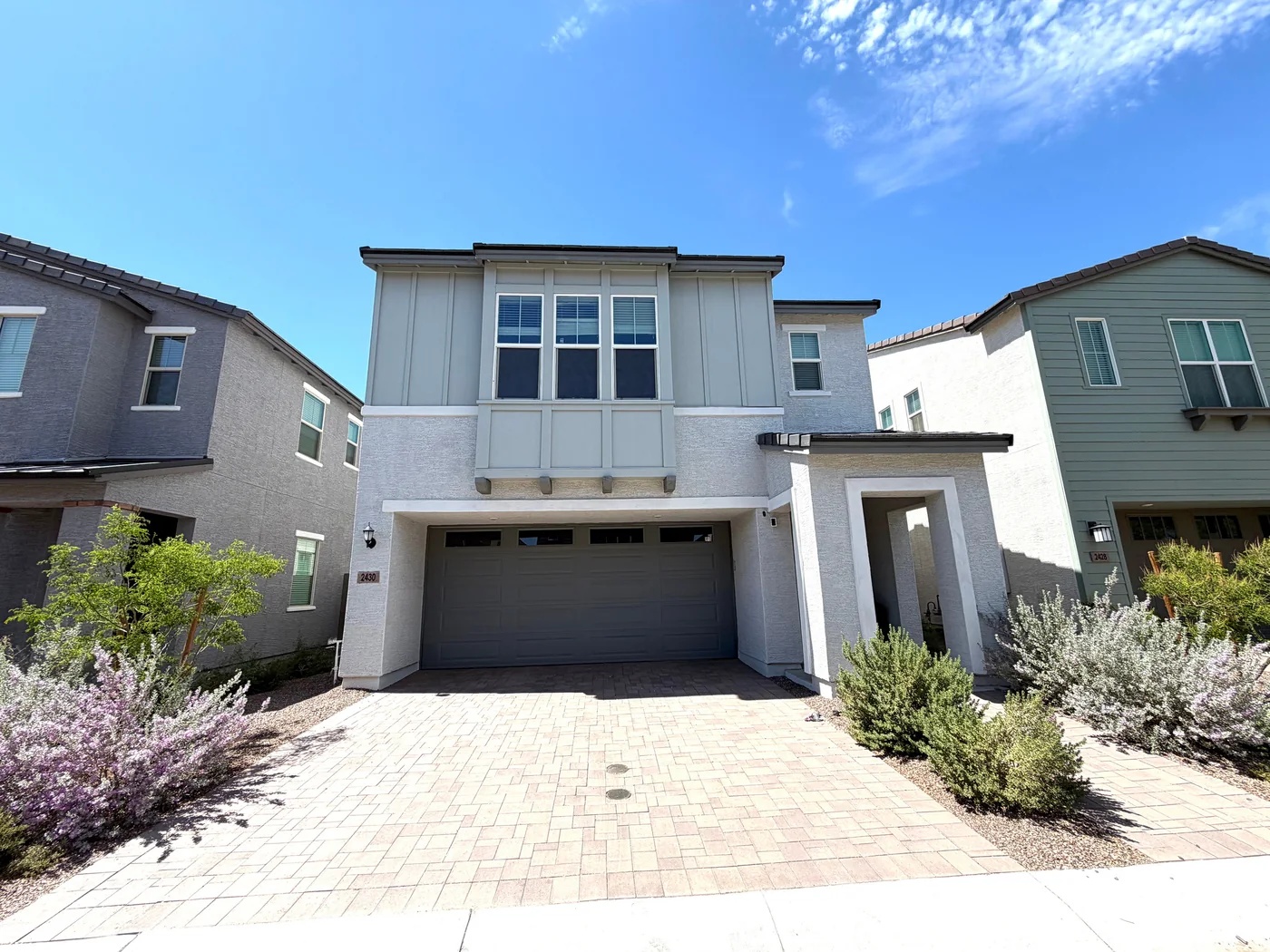
The cover is an authorized residential exterior photo. It does not identify the actual ownership form of the pictured property.